The AI Chef: Understanding LLM Terminology
A beginner-friendly guide explaining complex AI concepts like RAG, Agents, and MCP using a simple cooking analogy.
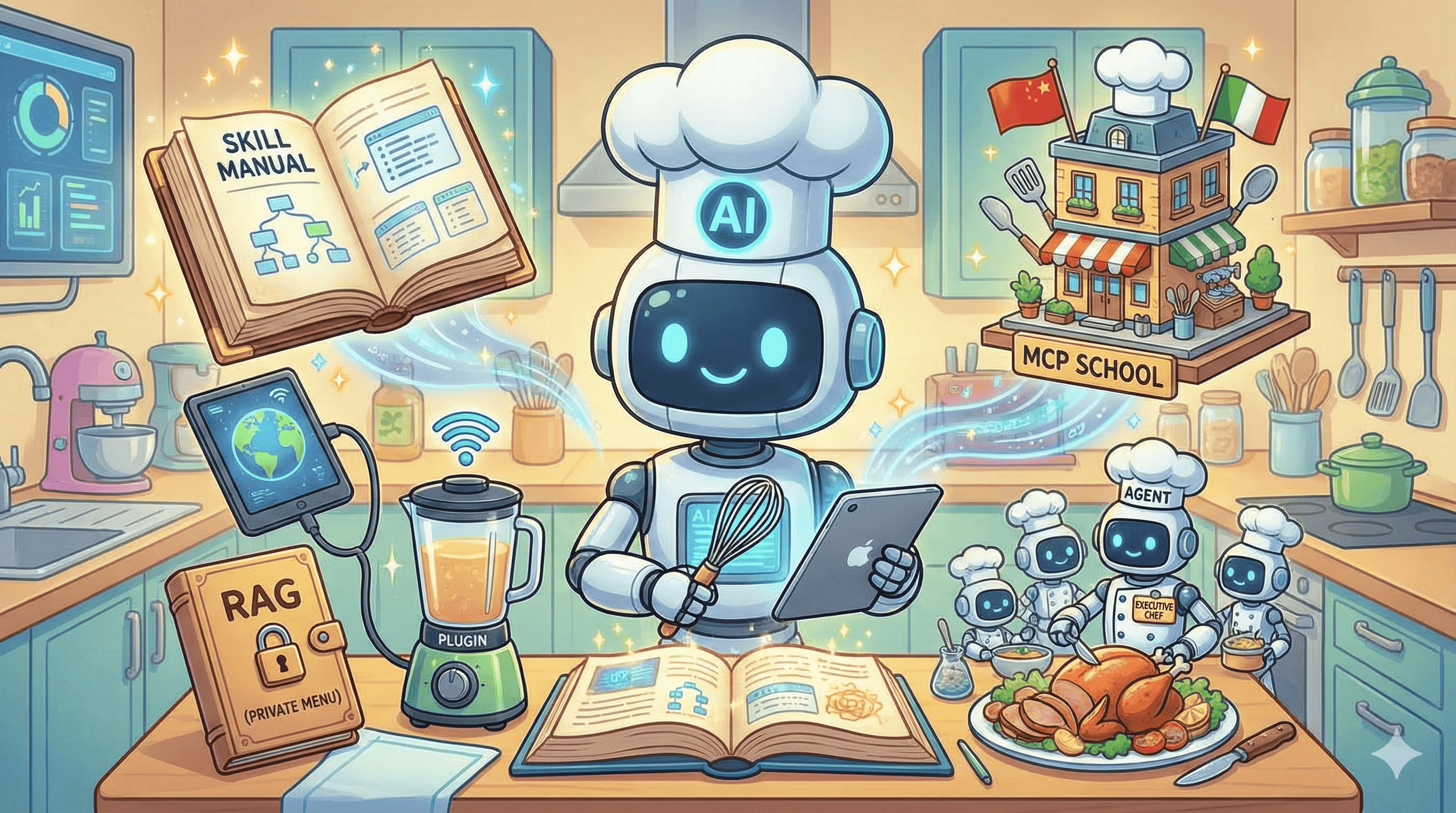
Fascinated by the rapid evolution of AI, I began learning these mind-blowing technologies. I consider myself an elementary user of Large Language Models (LLMs); I simply type my request into the prompt and wait for the magic to happen.
Until recently, I figured there were so many new tools—like new spells—available, and I got confused about what the use scenario was for each. Instead of giving technical definitions for every term, I always prefer using an analogy to help me understand. As you may know, I cook a lot in my daily life, and today I will use a chef analogy to explain these terms.
The Chef (AI Model)
Suppose the AI Model is the Chef. This chef has spent years in training (pre-training) learning how to cook. When a human (the user) places an order (the user prompt), the chef uses their internal brain to decide how to deliver the dish.
Skill
A skill is the organized manual of the chef's specific techniques. While the chef "knows" how to cook, defining skills such as "peeling a potato" or "using a steamer" standardize their output. It is the model's internal capability library that ensures every time they "peel," they do it with a consistent, professional, and standardized way.
Key Characteristics:
- The model knows the skill in its memory. The skill document helps standarize the process.
Plugin
A plugin is the chef's Internet Connection. The chef knows the fundamental theorems of cooking but doesn't know a recipe invented this morning. A plugin allows the chef to download the latest recipe (through an internet plugin).
Key Characteristics:
- Fetches real-time data that wasn't in the model.
- Relies on a specific connection to a specific service.
RAG (Retrieval Augmented Generation)
RAG is like a private restaurant menu. When the chef works for a specific restaurant, they cannot just cook what they like. Instead, they must strictly follow the restaurant menu (knowledge base). The chef must ensure the dish matches the restaurant's unique standards.
Key Characteristics:
- Allows the model to use sensitive internal data safely.
- Forces the model to use sources from the provided documents.
MCP (Model Context Protocol)
An MCP Server is the Universal Training School. Different schools (Chinese, Japanese, Italian) have unique tools (woks, specialized knives, stove ovens) and specific strategies (stir-frying, baking, etc.).
The chef doesn't need to be an expert in every school; they just need a standard way to access the school's "Server." Once connected, the chef gains the Protocol to use those specific tools and follow the guided steps correctly.
Key Characteristics:
- The model (chef) can "ask" the server what tools (like specific knives or pans) are available.
Agent
The agent is the Executive Chef. For all previous steps, a human had to tell the chef exactly what to do. But the agent figures out the "what" and "how" autonomously. You simply provide the goal: "I want a feast for my birthday party with friends from China, India, and the Middle East." The Executive Chef (Agent) then coordinates the tasks.
Key Characteristics:
- Autonomy.
- Iterative planning.
- Keeps track of what has been done (memory).
If you have other thoughts, feel free to contact me